
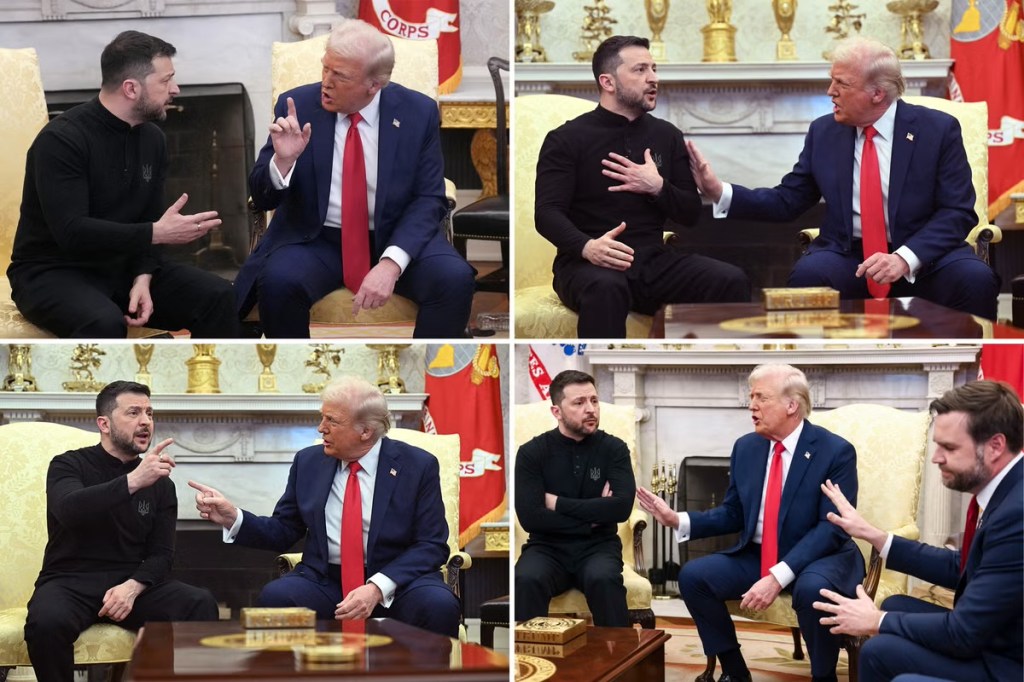
The meeting between Donald Trump and Volodymyr Zelenskyy on February 28, 2025, was a high-stakes diplomatic encounter that quickly unraveled into a tense and unproductive exchange.
When analyzed through the lens of Harvard’s principles of negotiation—separating people from the problem, focusing on interests rather than positions, generating options for mutual gain, and using objective criteria—it becomes clear that the personal mistrust and rigid positions of both leaders overshadowed any chance of meaningful negotiation and agreement.
One of the core tenets of the Harvard negotiation model is separating people from the problem, yet this meeting was deeply personal from the start. Trump had publicly criticized Zelenskyy before the meeting, calling him a “dictator” and accusing Ukraine of manipulating the U.S. into spending $350 billion on what he claimed was an unwinnable war. Zelenskyy, in turn, dismissed Trump’s rhetoric as a web of misinformation. During the meeting, Trump and Vice President J.D. Vance accused Zelenskyy of being ungrateful for U.S. aid, to which Zelenskyy retorted that Ukraine had paid with the blood of its people. Rather than addressing the core issue of U.S. military and financial support for Ukraine, the meeting comprised personal attacks and emotional responses to dictate the conversation. This failure to depersonalize the negotiation created an adversarial atmosphere that left little room for constructive dialogue.
Another key principle is focusing on interests rather than positions. Trump was primarily interested in ending the war quickly and reducing U.S. financial commitments, arguing that “Europe hasn’t done enough” while the U.S. has shouldered most of the burden. Zelenskyy, on the other hand, refered to Ukraine’s sacrifices and long-term security guarantees. However, instead of finding common ground, both leaders remained fixated on their rigid positions—Trump demanding that Ukraine show greater gratitude and financial accountability, and Zelenskyy refusing to acknowledge any criticism of U.S. aid oversight. Had they focused on shared interests, such as achieving stability in the region or securing a phased military assistance plan, they might have been able to bridge their differences. Trump viewed U.S. assistance as a favor, while Zelenskyy saw it as a shared responsibility in the fight against “Russian aggression”. Zelenskyy argued that Ukraine was the only country actively stopping Russia’s aggression and warned that if Ukraine fell, the U.S. could eventually face similar threats. Trump strongly dismissed this notion.
Generating options for mutual gain was another missed opportunity. The proposed minerals deal, which would have given the U.S. access to Ukraine’s rare-earth resources in exchange for continued support, could have been structured in a way that satisfied both sides. Trump saw the deal as a way to justify further aid, stating that America needed something in return for the billions it had given. However, Zelenskyy insisted that any agreement must come with long-term security assurances, making negotiations stall. Instead of exploring creative compromises—such as a phased minerals deal tied to incremental security commitments—both sides hardened their stances, leading to a deadlock. Zelenskyy did not realize that he was not in a position of power to dictate his terms. A more flexible approach could have turned this aspect of the discussion into a win-win scenario.
Finally, the principle of using objective criteria to resolve disputes was largely ignored. Trump raised concerns about the transparency of U.S. aid, suggesting that some funds remained unaccounted for. Rather than proposing an independent financial audit to address these concerns, the discussion devolved into an argument. Zelenskyy insisted that the aid had not been misused, while Trump remained skeptical.
Ultimately, the meeting ended without any agreements on military aid, long-term security commitments, or the minerals deal. Trump’s desire for a swift resolution to the war clashed with Zelenskyy’s insistence that negotiations with Putin were impossible. Trump’s belief that European nations had not contributed enough to Ukraine’s defense only added to his reluctance to continue extensive U.S. financial support without conditions. Meanwhile, Zelenskyy’s firm stance against Russia, his personal animosity towards Putin, and his demand for continued Western backing made it difficult for the two leaders to find common ground. The inability to separate personal grievances from diplomatic discussions, the rigid adherence to conflicting positions, the unwillingness to explore creative solutions, and the lack of objective benchmarks all contributed to the breakdown.
Interpretation by: Jawad Syed, PhD (South Asian Academy of Management)
Indicative Discussion Questions
- The article suggests that Zelenskyy was not in a position of power to dictate terms. In complex negotiations where one party has significantly more leverage, what tactics can the weaker party use to maximize its negotiation outcomes?
- How did personal emotions, past criticisms, and rigid perceptions influence the negotiation dynamics in this meeting? What lessons can business leaders take from this case about managing emotions in high-stakes negotiations?
- The meeting failed to generate options for mutual gain, particularly regarding the minerals deal. What are some alternative negotiation strategies that could have helped both sides craft a more flexible and beneficial agreement? How can business leaders apply similar strategies in corporate negotiations?
Citation: Syed, J. (2025). Negotiation gone wrong: Trump, Zelenskyy, and the Harvard Framework. South Asian Academy of Management.
 South Asian Academy of Management