
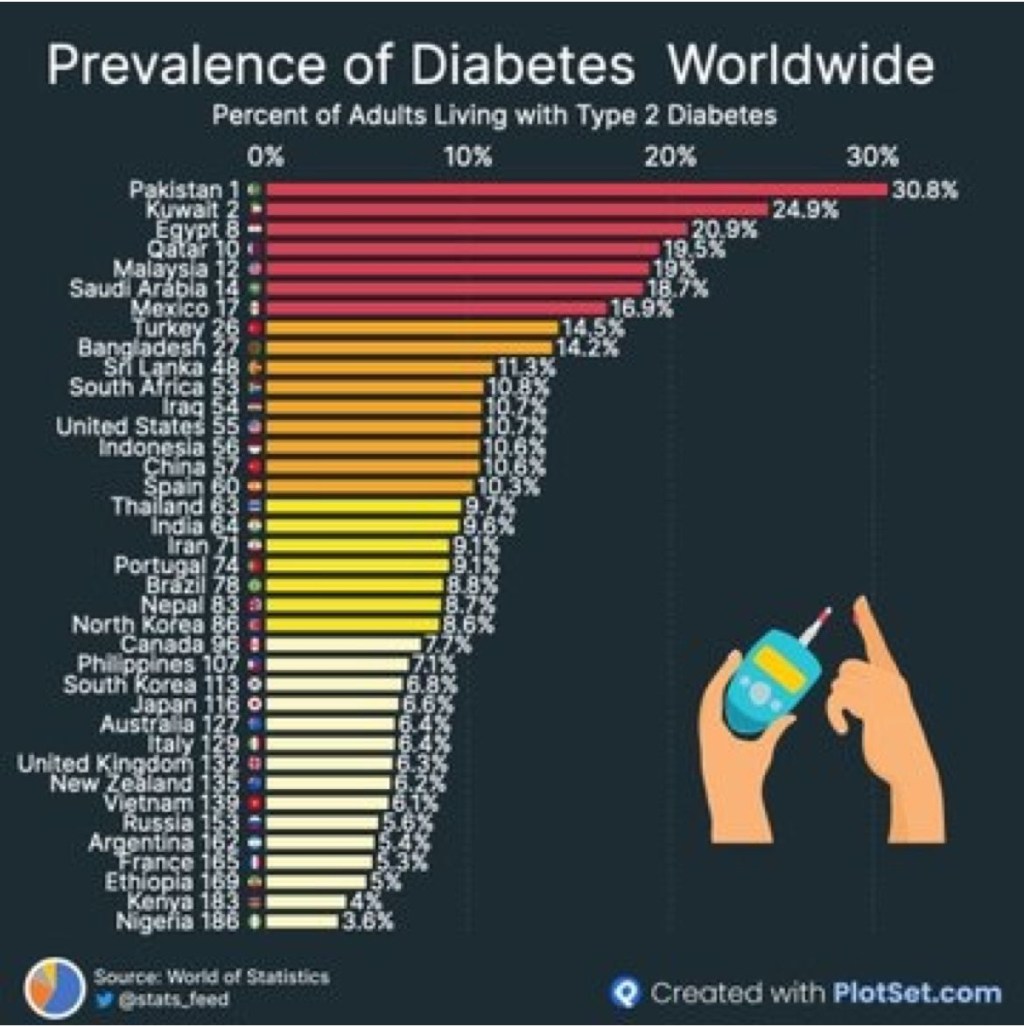
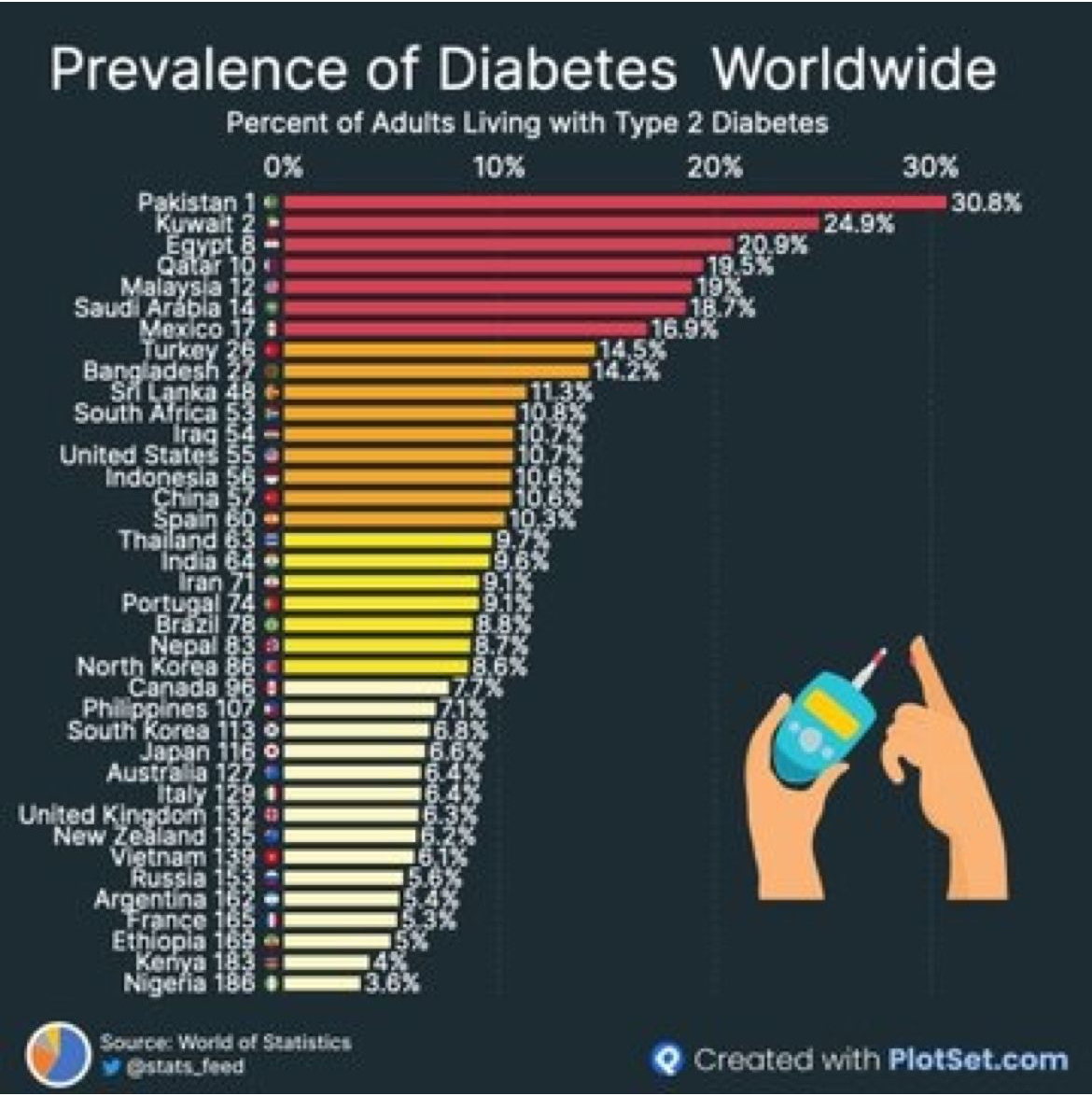
The recent statistics on diabetes rates in the world, i.e., % of people age 20-79 who have type 1 or type 2 diabetes, are alarming. Unfortunately Pakistan tops this list with about 30% rate (Source: World of Statistics).
According to the International Diabetes Federation (IDF), approximately 20% of adults aged 20-79 in Pakistan had diabetes in 2021. Apparently, this percentage has grown tremendously in recent years.
Countries with high rates of diabetes often share certain risk factors, such as sedentary lifestyles (lack of physical activity), unhealthy diets, and obesity. Urbanization and the adoption of Westernized lifestyles are known to contribute to the rising prevalence of diabetes in many countries.
Rapid urbanization is often accompanied by changes in dietary patterns, with an increased consumption of processed foods, sugary beverages (e.g. fizzy drinks and energy/sugary drinks), fast food, processed food and calorie dense food. These dietary changes, combined with reduced physical activity levels and genetic predisposition, contribute to the rise in obesity and diabetes rates.
Limited awareness about diabetes, its risk factors, insufficient knowledge about healthy eating habits, physical activity, and the importance of regular medical check-usually contribute to the diabetes burden. The unethical production and often misleading promotion of unhealthy drinks and foods are also contributing to this problem.
The diabetes burden is fracturing the already under-resourced health services in Pakistan and causing enormous medical, emotional and financial stress to millions of families.
Question:
What are the implications of this data for health industry, sugar and sugar products manufacturers, marketers and consumers, farmers, government policy makers, legislators, educators, media persons, activists, NGOs, opinion leaders, politicians, religious leaders, and other stakeholders?
(Jawad Syed)
 South Asian Academy of Management