
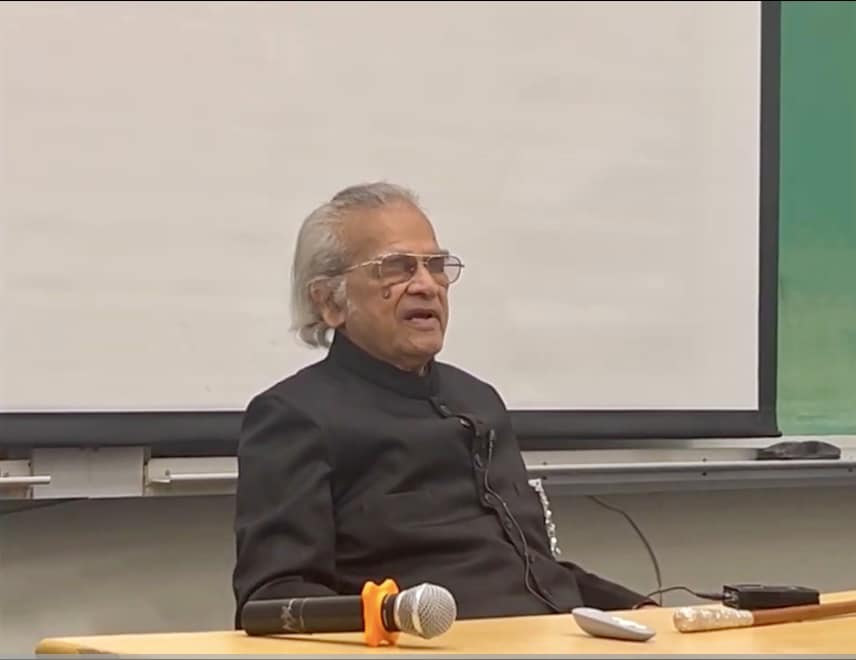
Dr Asad Areeb’s Guest lecture at LUMS on 19 February 2025.
Topic: The Purpose of Life (video available)
Language: Urdu
About the speaker: Dr. Asad Areeb is a Pakistani scholar and author, known for his contributions to Urdu literature, including works on literary criticism, history, poetry, and juvenile literature.
Key points from the talk at LUMS (excerpt from this video clip):
Dr. Asad Areeb emphasized the importance of resilience and perseverance in life. He highlighted that success and personal growth are deeply connected to an individual’s ability to face challenges with determination and a steadfast commitment to truth. Without perseverance, one may easily succumb to external pressures and lose sight of meaningful goals.
He also warned against falling into capitalist traps, where materialism and societal expectations often dictate people’s choices. Instead of blindly following consumer culture, individuals should cultivate self-awareness and critical thinking to navigate their lives with purpose. A key aspect of this journey is continuous learning—Dr. Areeb stressed that a person should be like a “hanging workshop,” always eager to acquire new knowledge and refine their understanding.
Another fundamental value he discussed was respect for parents and the importance of effective communication, particularly in conversations with elders. He advised practicing proper conversational manners, being mindful of one’s tone, and incorporating pauses in speech to ensure clarity and thoughtfulness in discussions. These elements not only reflect respect but also contribute to meaningful and impactful conversations.
Time management was another central theme. Dr. Areeb encouraged individuals to be in sync with time but not become its servant. While it is essential to stay aligned with the demands of the modern world, it is equally important to maintain control over one’s schedule rather than being enslaved by it.
A unique point he raised was the importance of Persian literature in understanding the profound thoughts of Iqbal and other great thinkers. Learning Persian, he suggested, allows deeper engagement with philosophical and spiritual wisdom that is often lost in translation.
Dr. Areeb also encouraged individuals to be creators of principles rather than mere followers of rigid systems. While systems provide structure, they should not become chains that restrict independent thought and personal values. Lastly, he emphasized the importance of self-sufficiency—individuals should take responsibility for their tasks instead of relying excessively on their wives or servants for personal work.
His talk provided a thought-provoking perspective on life, urging individuals to cultivate resilience, critical thinking, and personal discipline while staying rooted in ethical and philosophical wisdom.
Indicative dicussion questions:
- In what ways can individuals avoid falling into the traps of materialism and societal pressures while maintaining a sense of purpose in life?
- Why is effective communication, particularly with elders, essential in fostering respectful relationships, and how can we improve our conversational skills?
- Dr. Areeb emphasized the importance of Persian literature in understanding the thoughts of philosophers like Iqbal. How do you think learning a second language or delving into classical literature can broaden one’s intellectual and spiritual horizons?
Link to the lecture on SAAM’s YouTube Channel:
 South Asian Academy of Management