Event: “What Can CEOs Do to Foster Women’s Leadership and Drive Organizational Success?” – Webinar by South Asian Academy of Management (SAAM) – 22 January 2025
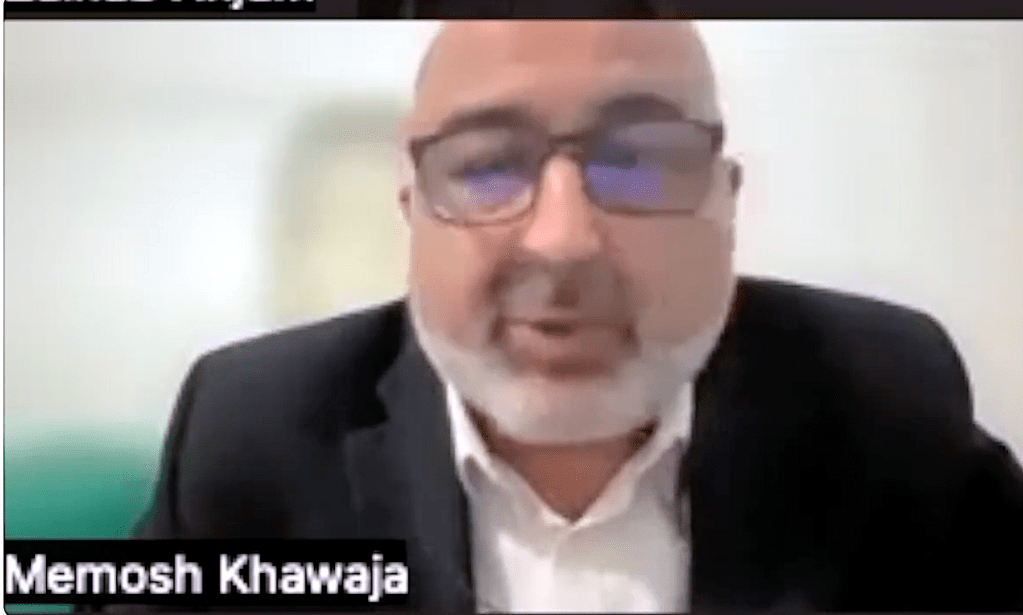
Speaker: Memosh Khawaja, Former CEO & President – Pakistan Institute of Corporate Governance (PICG), Henkel and Haleeb
Synposis
In this SAAM webinar talk, Memosha Khawaja offers a multi-dimensional analysis of women’s leadership in Pakistan by drawing from data, personal insights, and his extensive experience in corporate governance. He identifies key barriers faced by women after entering the workforce, despite academic excellence, and highlights organizational, societal, and policy-level constraints. His discussion touches on the role of company-level mentoring and networking, market-level support for gender diversity, and the importance of expanding women’s participation in executive functions like finance and supply chain. He also reflects on the regulatory landscape, particularly the role of SECP, and underscores how policy changes can drive board-level and broader institutional inclusion.
Transcript
Setting the Stage: Corporate Data and Policy Gaps
I think a very rich discussion and very rich experiences have been shared. So I would just add a little perspective from an analytical angle. I was also going through some internal data, as I was associated with the Institute of Corporate Governance recently, and therefore we have data on women leadership at different levels, etc. But tying it back to what companies are doing and where the gaps are coming from—I think team-level policies and interventions are not 100% of the problem-solving, but they do filter up a lot of women leaders otherwise.
I think it’s important—company internal policies definitely help. What is value-added is mentoring, networking opportunities, and role model availability. That has been said enough, but I think it’s very helpful because the informal networks companies operate in normally don’t offer structured networks.
The Importance of Informal Networks and Market Support
But mentoring opportunities at the market level are improving. I’m sure you’re in contact with a lot of work being done to promote and support companies active in gender diversity. Companies are being recognized, and leaders’ networks are publishing profiles. There are now directories available listing hundreds of women qualified and available as independent directors. It’s not a big number, but in the Pakistan context, it’s a sizable one. I think that number has to go up. So overall, market support exists.
Societal and Personal Constraints to Leadership Growth
Another thing, as you all touched upon, is the societal pressures and personal pressures—personal outlook, ambition, and self-worth. I’ve seen this in many areas. There were some very good insights into why this happens: because women want to be more confident. I did not know the research, but I’ve noticed that there is hesitation in pitching oneself toward more risky environments. There’s a risk-averse attitude in terms of ambition and moving forward, plus societal expectations and challenges.
So broadly, in my view, there are three kinds of constraints: societal and personal challenges, the organizational environment, and the overall market context. Women are there when you hire them—that’s absolutely right. In my exposure across multiple companies, in management trainee programs we always seek at least 40%–50% women. They come in from good universities like LUMS and others. Even at universities, they do phenomenally well. In fact, in my MBA class, I remember the top 10 included a good number of females, including the number one position.
The Vertical and Horizontal Barriers in Career Progression
So I don’t think education is the issue. The issue is what happens to them after they join the organization. In management trainee programs, 40%–50% are females, but then due to company policies or practices, they filter out. I think there’s also a horizontal barrier, not just a vertical one. This is a value I’d like to add. When I look at succession planning from a CEO’s perspective—having been involved with boards and CEOs, and also in my own company—CEOs often don’t find women ready to be nominated as successors.
Time and again, CEOs have said that if they’re going to appoint somebody as a successor, the person—male or female—should have sufficient commercial and technical experience. But the female population is often limited to certain functions and not widespread across critical areas like finance, supply chain, or sales. In many fields, female presence—let alone leadership—is limited. This is critical for CEO-level promotions and succession planning. So we must investigate: why are women bound to certain fields?
In HR, I’m sure 70% of department heads are women in Pakistan. Almost every company has female heads in HR and marketing. But marketing is easier compared to finance or sales. In such cases, we had to encourage and sometimes push ambitious women to take on these roles. It’s not ideal to go into sales or supply chain roles, but we had to explain that such job rotations are essential if one wants to become a senior leader.
Of course, there are many more choices for men due to their numbers. But we can help the cause by adding more female volume to key executive functions like supply chain and sales. For example, if we hire a set percentage of females in these departments, it can help develop leaders for the C-suite level.
That was one other insight I wanted to bring. I’m happy to get more thoughts on this. Maybe I can also add a bit on regulation, as my recent experience has been in policy development for the SECP. SECP requirements include one female at the board level, but there’s now serious consideration to move to two female directors. Globally, best practice is one-third representation, but even two would be helpful if we can move there by 2024.
Regulation and the Role of SECP in Driving Gender Diversity
SECP policies and regulations such as ESG disclosure guidelines now require companies to report on gender diversity, gender pay, and mainstreaming roles. Board members are expected to oversee these topics as part of their responsibilities. That, I think, is going to help discussions at the board level and will have a trickle-down effect as well.
Indicative Discussion Questions
- What are the key reasons why academically high-achieving women struggle to rise through the ranks in organizations after entry-level hiring?
- How can organizations encourage women to pursue leadership-track roles in male-dominated functions such as sales, finance, and supply chain?
- What role do informal networks and mentoring play in supporting women’s leadership, and how can they be institutionalized within companies?
- How might SECP’s regulatory reforms impact the inclusion of women at the board level and influence organizational culture more broadly?
Copyright and Permissions: © South Asian Academy of Management. An inspection copy of this article is available free of cost at this site. For classroom use or to order copies or request permission to reproduce materials, email: info@southasianaom.org OR call (+92) 3291009981. This publication may not be digitised, photocopied, or otherwise reproduced, posted, used or transmitted, without the permission of South Asian Academy of Management.
 South Asian Academy of Management