
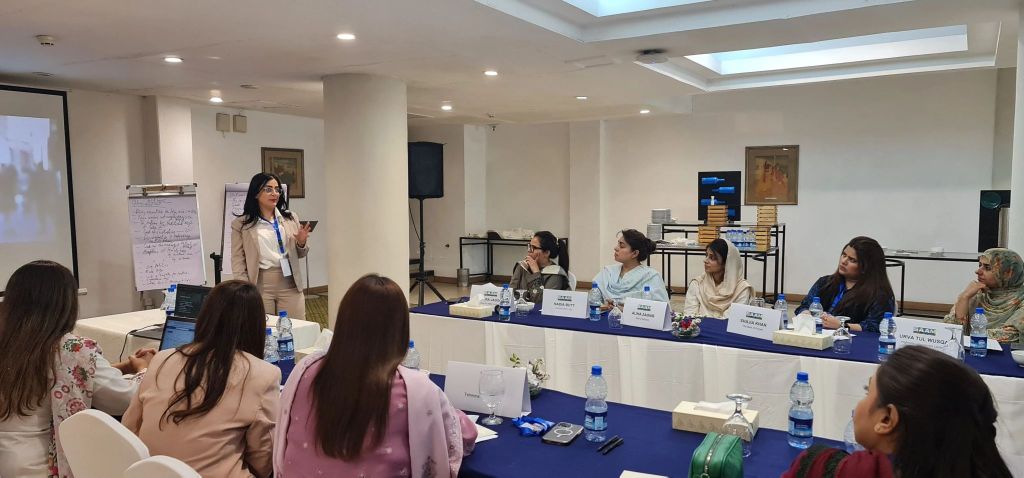
I recently had the privilege of training and engaging with a group of truly inspiring women leaders from across Pakistan at the Women Leadership Program (WLP): Breaking the Glass Ceiling, held at Avari Lahore on April 17-18, 2025 under the auspices of South Asian Academy of Management (SAAM). Participants came from a wide range of sectors, including corporate organizations and development sectors, each bringing their unique perspectives and experiences. It was a rewarding and enriching experience to connect with such a dynamic and committed group of professionals.
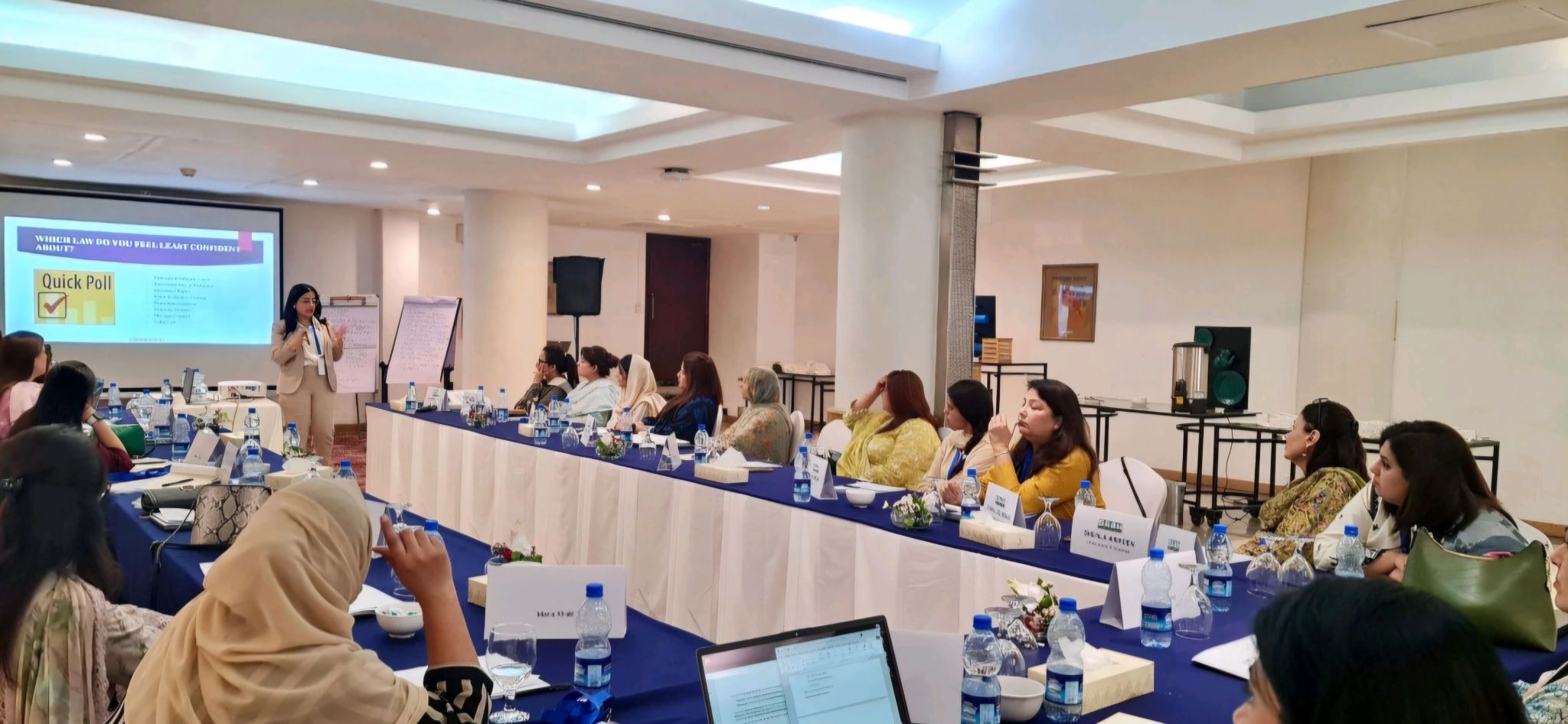
During the program, I had the opportunity to speak on an important topic: women’s legal rights in Pakistan. This is an area that significantly impacts women’s ability to lead confidently in both personal and professional spheres. In our session, we explored key legal issues, including maternity and paternity leave, workplace harassment, inheritance, maintenance, and custody rights, as well as protections against domestic violence. These topics are essential for women leaders to understand, as they form the foundation of legal protections and entitlements that support women’s participation in the workforce and in leadership positions.
We also discussed several critical legal distinctions, such as the difference between resignation and termination, as well as the rights and processes related to divorce, specifically khula and talaq. These distinctions are important for women in leadership to navigate their personal and professional lives with clarity and confidence. In addition, we reviewed the constitutional rights of women, their right to be represented on corporate boards, and the legal safeguards available under the Anti-Harassment Law.
The participants’ engagement throughout the sessions was truly gratifying. Their willingness to actively participate, ask insightful questions, and share their experiences made the discussions all the more valuable. This kind of dialogue is essential in empowering women leaders, as it helps them not only understand their rights but also feel equipped to challenge societal norms and workplace barriers.
It was an enriching experience to be part of such a meaningful program, and I’m grateful for the opportunity to contribute to the growth of these women leaders. I’m hopeful that the connections made during this program will continue to grow, fostering mutual support and collective advancement.
Barrister Hamna Zain


 South Asian Academy of Management