
Synopsis Case Description
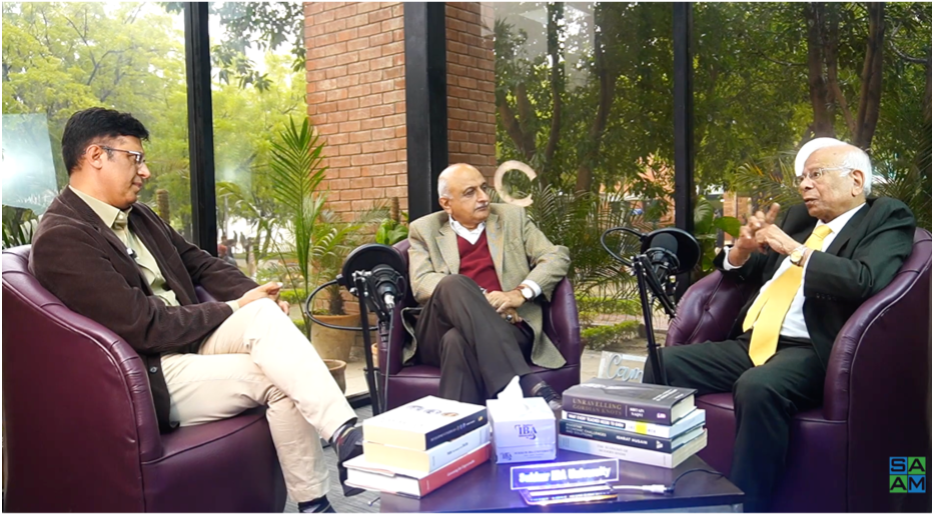
This video case study examines the six-decade career of Dr. Ishrat Husain, a distinguished Pakistani civil servant, economist, and institutional reformer. Tracing his journey from the refugee camps of Partition to the highest echelons of global development at the World Bank and national leadership as Governor of the State Bank of Pakistan, the case explores the foundational experiences, ethical choices, and leadership practices that defined his public life.
The case is structured around a 74-minute video interview with Dr. Husain, supplemented by a detailed biographical appendix.
Intended Learning Outcomes (ILOs)
Upon successful discussion of this case, participants will be able to:
- Analyze how personal adversity and values shape authentic leadership behavior.
- Evaluate the “autonomy for accountability” bargain as a strategy for leading in politically constrained environments.
- Assess consultative, bottom-up approaches to driving institutional reform against entrenched resistance.
- Articulate the personal and professional costs of maintaining ethical consistency.
- Apply insights from Dr Husain’s career to diagnose and respond to ethical dilemmas in their own contexts.
Suitable Courses
Leadership and Ethics, Organizational Behavior, Public Policy / Public Administration
Indicative Discussion Questions
- Does adversity always build resilient leaders? What other factors determine whether hardship builds or breaks leadership potential?
- Dr Husain’s condition to General Musharraf was “autonomy for accountability.” Is this bargain sustainable in politically volatile environments?
- His initial reform plan faced 95% opposition from senior management. He responded by building ownership among junior staff. What are the risks and benefits of this “bottom-up” approach?
- When a close relative failed an entry exam, Dr Husain refused to intervene, stating, “Over my dead body.” Do you agree with this absolutist stance? Are there circumstances where a minor exception might be justified to preserve a larger reform agenda?
- Dr Husain regretted resigning from two reform roles, wishing he had “stayed back and fought.” How should a leader determine when to persist and when to withdraw?
- Which of Dr Husain’s leadership practices (e.g., deep consultation, refusal to create a “kitchen cabinet,” bypassing resistant seniors) would be most difficult to implement in your organization, and why?
- If you were in Dr Husain’s place in December 1999, would you have left the World Bank to lead Pakistan’s central bank during military rule and economic crisis? What factors would influence your decision?
Authors: Jawad Syed and Syed Zahoor Hassan
Link to full video: https://www.youtube.com/watch?v=jB5l5gb-3ow
Copyright and Permissions: This is a working draft of a case which is currently being refined for use at Lahore University of Management Sciences (LUMS).
 South Asian Academy of Management