
— Dr Jawad Syed (Professor of Leadership, LUMS)
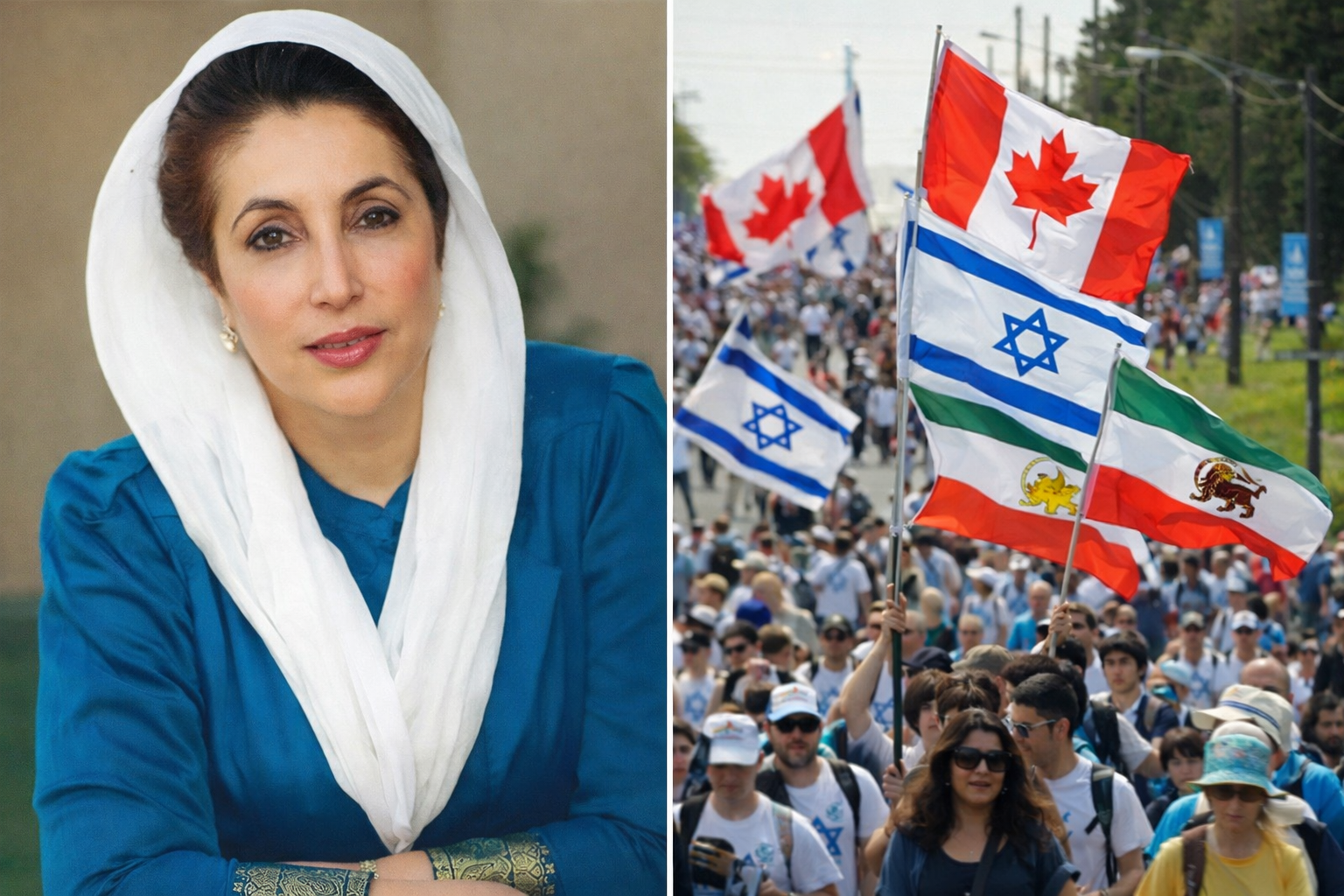
In recent months, an unsettling spectacle has emerged across certain segments of the Iranian diaspora across the US and other Western countries. At demonstrations in Western capitals, some self-described opponents of the government in Iran—particularly monarchist factions and other critics of the Islamic Republic—have been seen waving Israeli flags and openly supporting the United States–Israel illegal military campaign against their own country.
Opposition to a government is legitimate and often necessary. But cheering the bombardment of one’s homeland by foreign powers raises a troubling ethical question. Wars, particularly those driven by the quest of oil and geopolitical hegemony, rarely punish governments alone. They devastate ordinary people, destroy infrastructure, and leave lasting humanitarian and ecological scars. Reports from southern Iran have described the massacre of nearly 180 schoolgirls in Minab following U.S. strikes, while Israeli attacks on oil depots have triggered massive fires and thick toxic clouds over Tehran, creating environmental and health hazards for millions.
One may oppose a government with moral conviction. But enabling, abetting and celebrating the neocolonial destruction of one’s own country crosses into a far darker territory.
Diaspora politics often produces such moral tensions. Exile amplifies anger toward ruling elites and can intensify feelings of injustice and grievance. Yet it also poses a deeper ethical challenge: how can political opponents resist authoritarian rule without severing their moral bond with the nation itself?
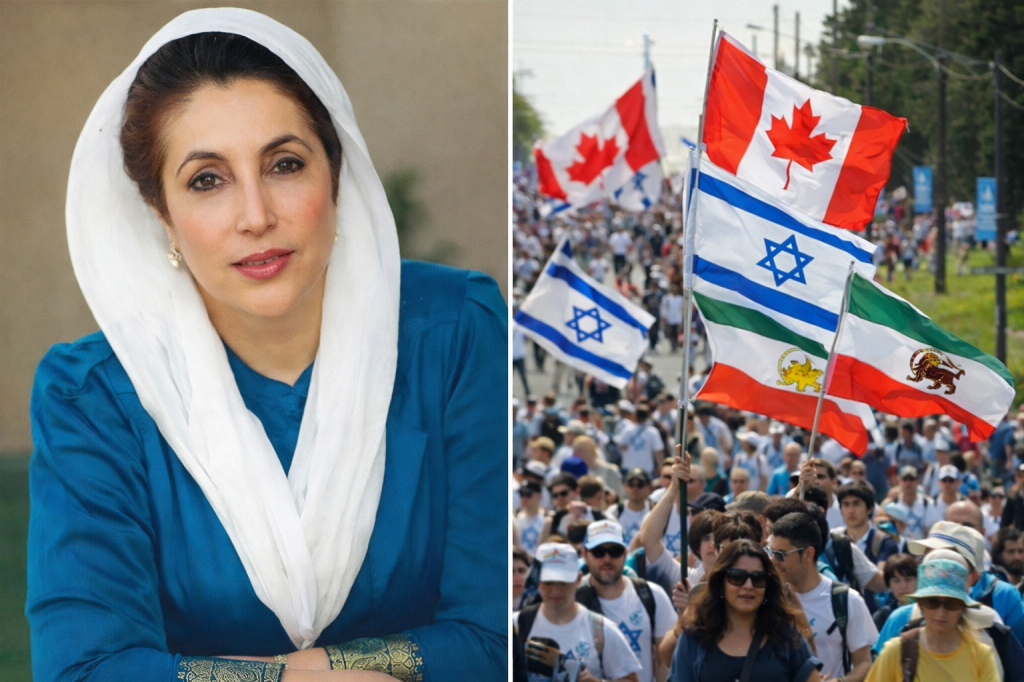
Few modern political leaders confronted this dilemma as directly or as courageously as Benazir Bhutto.
Bhutto’s political life was forged in tragedy. Her father, Zulfikar Ali Bhutto, Pakistan’s elected prime minister, was overthrown in a military coup by General Muhammad Zia-ul-Haq in 1977 and executed two years later following a controversial trial. Few political wounds cut deeper than the execution of a parent by the state.
Benazir Bhutto herself endured imprisonment, harassment, and years of exile in London and Dubai. Later she would face another confrontation with military rule under General Pervez Musharraf. By any measure, she had ample reason to view Pakistan’s state institutions with bitterness or hostility.
Yet Bhutto took a different path.
Despite the trauma inflicted on her family and party, she never framed her struggle as one against Pakistan itself. Instead, she distinguished between opposing those who held power and preserving the legitimacy of the state that belonged to the people.
This distinction was not merely rhetorical. Throughout her years in exile, Bhutto resisted the temptation—common among exiled leaders—to seek support from countries widely perceived as adversaries of Pakistan, including India or Israel. Instead, she maintained a principled stance in support of the legitimate rights of the people of Kashmir and Palestine. She understood that inviting adversarial external actors into Pakistan’s domestic political conflicts would undermine the legitimacy of the democratic struggle she sought to lead.
Instead, Bhutto consistently emphasized that Pakistan’s political transformation had to remain indigenous—driven by the Pakistani people and negotiated within Pakistan’s own political framework.
This belief shaped her approach to the country’s institutions, including the military. Even while confronting military rule, Bhutto believed that sustainable democratic change required engagement rather than permanent estrangement. Negotiation, dialogue, and political participation—however imperfect—were essential to maintaining the legitimacy of the democratic project.
In this sense, Bhutto embodied a rare combination of democratic commitment and state consciousness.
Her nationalism was not symbolic but substantive. Her father had been the principal architect of Pakistan’s nuclear program, a project rooted in the conviction that national security required strategic self-reliance. Benazir Bhutto herself played an important role in strengthening Pakistan’s missile capabilities during her political career. She believed that defending the country’s sovereignty and security was fully compatible with the struggle for democratic rights.
For Bhutto, democracy and state integrity were not opposing values. They were mutually reinforcing.
This ethic of principled opposition offers an important lesson for diasporas today.
Across the world—from the Middle East to Eastern Europe to parts of Africa and Asia—diasporas increasingly influence political debates about their countries of origin. Social media has amplified these voices, often intensifying anger and polarization. Western intelligence agencies often invest in recruiting agents from the diaspora to advance their geopolitical interests. While diaspora activism can highlight injustice and mobilize international attention, it can also slide into narratives that delegitimize national institutions or welcome external neo-colonial intervention.
History shows that such approaches rarely produce stable democratic outcomes. Political movements that detach themselves entirely from the societies they claim to represent often lose credibility at home. Sustainable change usually emerges from struggles that remain anchored within national communities and institutions—even when those institutions require reform.
Bhutto understood this reality instinctively. Her political struggle was fierce, uncompromising in its demand for democratic rights. Yet it was always framed as a struggle for Pakistan, not against it.
This distinction continues to resonate in contemporary political discourse. Bilawal Bhutto Zardari, Bhutto’s son, once remarked that Pakistanis may disagree with certain generals but the army remains their own institution. This sentiment reflects a broader principle: criticism of power does not necessarily require the destruction of institutions that belong to the nation.
For diasporas wrestling with authoritarian regimes in their homelands, this is a crucial lesson.
Anger at injustice is natural. Exile often sharpens the desire for accountability and change. But ethical political leadership requires something more difficult: the ability to oppose rulers without losing sight of the broader national community. And in one’s struggle for democracy, one must not become a pawn in promoting neocolonial agendas.
Benazir Bhutto’s life ended tragically when she was assassinated by Islamist extremists (Takfiris/Khwarij) in Rawalpindi in 2007 after returning to Pakistan to contest democratic elections. Yet the political ethic she embodied remains deeply relevant.
One can resist dictatorship without cheering foreign bombs. One can fight injustice without abandoning the nation. And one can demand democracy while still defending the sovereignty and integrity of the state.
In an age of polarized politics and increasingly vocal diasporas, that delicate balance between dissent and patriotism may be one of the most important political lessons of our time.
 South Asian Academy of Management