Synopsis
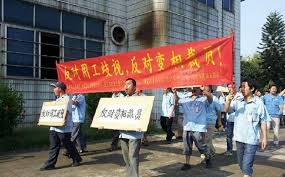
This case examines the state of trade unions, industrial action, and labour rights in China, focusing on the role of the All-China Federation of Trade Unions (ACFTU) and its influence on workplace disputes. Unlike in many countries where unions operate independently, China’s unions are government-controlled, limiting their autonomy and effectiveness. The case highlights the increasing trend of workers organizing independent strikes, particularly in sectors such as manufacturing, construction, retail, and services. It also discusses key incidents, such as the 2015 Guangdong strikes and the 2016 crackdown on labour activists, illustrating the broader tensions between the government, businesses, and workers. The case raises critical questions about the impact of government-controlled unions, labour unrest, and restrictive labour policies on worker rights and economic stability in China.
Intended Learning Outcomes (ILOs)
By the end of this case discussion, students should be able to:
- Analyze the relationship between government-controlled trade unions and industrial action in China.
- Evaluate the causes and consequences of labour unrest in an authoritarian economic system.
- Assess the role of legal frameworks and state intervention in shaping industrial relations.
Target Courses & Programs
This case is relevant for:
- Undergraduate & Graduate Courses:
- Human Resource Management (HRM)
- Industrial Relations and Labour Law
- MBA & Executive Programs:
- Industrial Relations and Labour Law
- Global Business and Public Policy
Author: Jawad Syed
Copyright and Permissions: (c) South Asian Academy of Management. An inspection copy of this case is available free of cost at the following link. For classroom use or to order copies or request permission to reproduce materials, email: info@southasianaom.org OR call (+92) 3291009981. This publication may not be digitised, photocopied, or otherwise reproduced, posted, used or transmitted, without the permission of South Asian Academy of Management.

